


Best Alternatives to Old Federal Pacific Panels

Table of Contents
Why Federal Pacific Panels Are Still a Concern
Signs an Electrical Panel Needs Replacement
Best Electrical Panel Brands for Homes
Square D
Eaton (Cutler Hammer)
Siemens
Side-by-Side Selection Criteria
Can You Just Replace the Breakers Instead?
How to Choose the Right Federal Pacific Panel Replacement
1. Start with the service amperage
2. Count circuits, then add spare spaces
3. Confirm the physical fit
4. Match the breaker family to the panel line
5. Decide on smart-panel features before ordering
6. Verify compatibility with the existing service entrance and grounding
7. Match the panel to the home
8. Use contractor familiarity as a tiebreaker
Conclusion
Frequently Asked Questions
Last Updated: October 12, 2026
Why Federal Pacific Panels Are Still a Concern
A Federal Pacific Electric panel is an older residential panel, most commonly the Stab-Lok line, installed in many homes between the 1950s and 1980s.
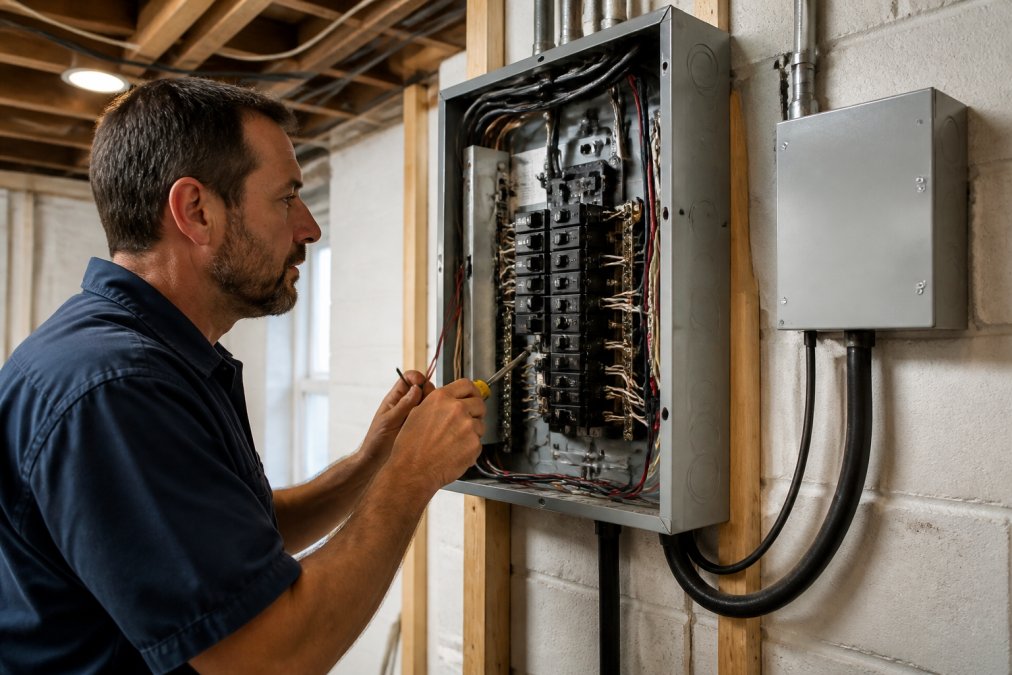
That failure mode makes an old Federal Pacific panel a genuine safety issue, not just an outdated one: when a breaker fails to trip, current keeps flowing into a circuit that should have been cut off, wiring overheats, and fire risk climbs.
At Star Bright Electric, we have walked Northeast Ohio homeowners through this decision for many years, and the pattern is consistent: the panel looks fine until an electrician opens the cover.
Watch Out The most common mistake we see is assuming a working panel is a safe panel. A Federal Pacific breaker can appear to function normally for years while failing to trip under a real fault, so the one moment it matters most is the moment it does nothing.
Signs an Electrical Panel Needs Replacement
The clearest sign an electrical panel needs replacement is repeated breaker trips, warm or discolored covers, burning smells, or a panel that cannot keep up with modern demand.
Watch for these specific signals:
Breakers that trip often, or that never trip at all during an obvious overload
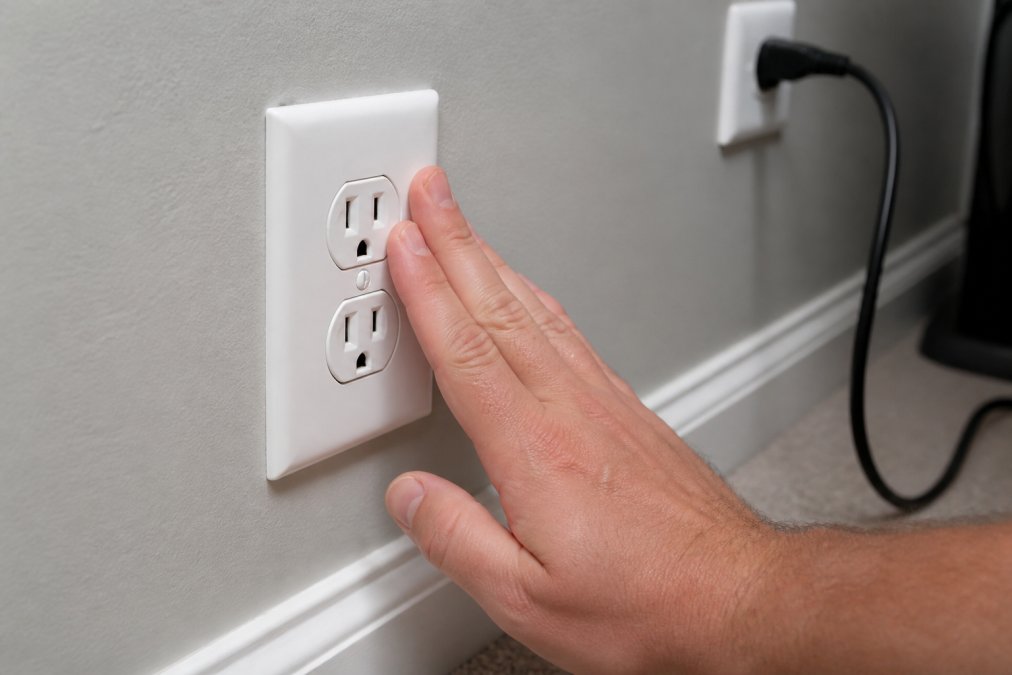
A panel cover that feels warm to the touch or shows scorch marks
Faint burning or fishy odors near the panel
Older homes also run into a capacity problem: modern households pull far more load than they did decades ago, and an aging service may lack the amperage or circuit spaces to support it.
Best Electrical Panel Brands for Homes
The best electrical panel brands for homes are Square D, Eaton, and Siemens, and each sells several distinct product lines rather than a single panel. Brand-level praise tells you almost nothing: the panel that fits your home is decided by the specific line, its bus bar rating, its circuit count, and its breaker family. Below is a practical comparison of the lines an electrician is most likely to quote for a Federal Pacific replacement, followed by the criteria that decide the pick.
Product Line | Breaker Family | Typical Bus Rating | Best For | Watch For |
Square D Homeline | Homeline (one-inch, plug-on) | 100A-225A | Standard single-family replacements on a budget | Value line; fewer accessory options than QO |
Square D QO | QO (Qwik-Open, plug-on) | 100A-225A | Homes where the electrician wants the premium line | Higher component count; confirm enclosure fit |
Eaton BR | BR (one-inch, plug-on) | 100A-225A | Broad availability and flexible layouts | BR is a legacy-compatible family; verify listing for the specific panel |
Eaton CH | CH (CH-type, plug-on) | 100A-225A | Homes wanting a copper bus and a sturdier feel | Less commonly stocked than BR |
Siemens PN | QP / QPH (plug-on) | 100A-225A | Buyers who want a clearly defined series | Series name alone doesn't confirm service fit |
Siemens ES | QP (plug-on) | 100A-225A | Value-focused replacements | Fewer configuration options than PN |
Square D
Square D splits its residential line into Homeline and QO. Homeline is the value line: one-inch plug-on breakers, wide stocking, and enough configurations to cover most single-family replacements. QO is the premium line, built around the QO breaker family with a sturdier bus and broader accessory catalog.
"Square D" alone is not a specification: Homeline and QO breakers do not interchange, and enclosure dimensions differ. Confirm the exact line before ordering.
Eaton (Cutler Hammer)
Eaton's residential offering is built around two breaker families: BR and CH. BR is the broad-availability line, one-inch plug-on breakers, a wide range of panel sizes, and configuration flexibility for unusual service arrangements or limited wall space.
BR and CH breakers are not interchangeable, and "Eaton panel" is not a complete answer, the line, bus rating, and circuit count determine fit.
Siemens
Siemens sells two residential lines worth knowing: PN and ES. PN is the better-defined series, built around the QP breaker family and most often named in panel comparisons.
The series name alone does not tell you whether Siemens suits your service entrance and grounding arrangement, so treat it as a candidate to review with your electrician rather than a guaranteed fit.
Side-by-Side Selection Criteria
Compare the lines on the same six axes:
Bus rating. Match the bus rating to the service amperage you need now and expect later. A 200A bus on a 200A service is the common target for a modern single-family home.
Circuit spaces. Count existing circuits, then add spare spaces for future work. A 40-space panel suits larger homes; a 20- or 24-space panel often covers a smaller one.
Breaker availability. Homeline, BR, and QP breakers are the most widely stocked. QO and CH are common but less universal, so confirm local supply before committing.

Pro Tip Ask your electrician to name the exact product line and breaker family in the written quote, not just the brand. "Square D" or "Eaton" on a proposal is not specific enough to compare against another bid.
Can You Just Replace the Breakers Instead?
Replacing the breakers alone is usually not a real fix for a Federal Pacific panel. Aftermarket Stab-Lok breakers exist, some described as UL-approved or UL Classified, but a new breaker does not correct the underlying panel design or the condition of the bus bar and connections behind it.
A breaker is one component of a system. The bus bar, enclosure, wiring terminations, and overall design all contribute to whether the system protects your home, and swapping breakers leaves the rest untouched.
Key Takeaway A replacement breaker changes one part. A panel replacement changes the system. If the concern is the panel itself, replacing only the breakers does not resolve it.
There is a place for breaker replacement, but it is narrow. If an inspection finds a single failed breaker in an otherwise sound, modern panel, replacing that breaker is reasonable. On an old Federal Pacific panel, that logic does not hold.
How to Choose the Right Federal Pacific Panel Replacement
Choosing the right Federal Pacific panel replacement comes down to matching the panel to your home's actual load and your electrician's documented plan, not brand reputation alone. The criteria below are ordered the way an electrician works through them.
1. Start with the service amperage
The amperage decision drives everything else. Most older homes with a Federal Pacific panel were built with a 100A service; many modern households need 200A for the loads they already have. If the service stays at 100A, a 100A panel with a matching bus is the target. If it is upgraded to 200A, the panel must be rated for 200A and the service entrance, meter base, and grounding electrode conductor evaluated in the same job.
2. Count circuits, then add spare spaces
Count the circuits in the existing panel, then add room for growth. A panel with no spare spaces limits every future project, a home office circuit, a workshop outlet, or a kitchen remodel all require open spaces. A 40-space panel is common for larger homes; a 20- or 24-space panel often covers a smaller one. Most electricians leave at least four to six spare spaces after installation.
3. Confirm the physical fit
Measure the available wall space and confirm enclosure dimensions before ordering. Enclosures vary in width, height, and depth, and a replacement that does not fit the wall cavity or the code-required working space becomes a much larger project. Confirm whether the existing service entrance location still works or the panel needs to move.
4. Match the breaker family to the panel line
Each product line accepts its own breaker family: Square D Homeline takes Homeline, Square D QO takes QO, Eaton BR takes BR, Eaton CH takes CH, and Siemens PN and ES take QP. These families do not interchange. Choosing a line whose breakers are widely stocked locally makes future service easier and factors into what an electrician recommends.
5. Decide on smart-panel features before ordering
Some modern panels add circuit-level energy monitoring and remote switching. These optional features change the panel selection, wiring layout, and commissioning step, so decide before the panel is ordered, retrofitting later is a different job.
6. Verify compatibility with the existing service entrance and grounding
The new panel has to work with the existing service entrance conductors, grounding electrode system, and bonding arrangement. On an older home, the grounding electrode conductor may be undersized by current standards and water-pipe bonding may need updating. These are common findings during a Federal Pacific replacement, best identified during the assessment rather than on installation day.
7. Match the panel to the home
Different homes point to different lines:
Older single-family home, modest load. A 100A or 200A panel from the Homeline, BR, or ES line covers the job with widely available breakers.
Larger home or one adding a major load. A 200A service with a 40-space panel from QO, CH, or PN gives room for growth and a sturdier bus.
Renovation or addition. Plan the panel around the new circuits the project will add, and confirm spare spaces before the walls close.
8. Use contractor familiarity as a tiebreaker
When two lines are otherwise equal for your home, the one your electrician installs regularly tends to be installed correctly and serviced easily, a legitimate tiebreaker when the technical fit is close.
Key Takeaway Work the criteria in order: amperage first, then spaces, then physical fit, then breaker family, then optional features, then compatibility. Brand reputation comes last, because the line and the breaker family are what actually determine whether the panel fits your home.
If you are weighing this against other projects, our team handles panel work and service upgrades together so the decision is made once, with the full picture in view.
Conclusion
The hard part of an old Federal Pacific panel is not choosing a replacement brand. It is accepting that a panel which looks and behaves normally may not protect your home when it counts.
Star Bright Electric has served homeowners and light commercial property owners since 1999, and we back our panel work with a lifetime labor warranty, free estimates, and a satisfaction guarantee. We are licensed, insured, and we walk you through what your home actually needs before any work begins. Contact us to schedule an assessment of your panel and get a clear plan for the replacement.
Frequently Asked Questions
When did Federal Pacific stop making panels?
Federal Pacific Electric stopped producing Stab-Lok panels in the 1980s. The company's breakers developed a reputation for failing to trip during overloads and short circuits. Because the panels are decades old, replacement parts can be hard to find, and many electricians now recommend a full panel replacement rather than trying to repair an aging Federal Pacific panel.
Can you replace a Federal Pacific panel without rewiring the whole house?
In most cases, yes. A panel replacement swaps out the box, breakers, and connections at the panel itself. The existing branch circuits running through your walls usually stay in place. However, if an electrician finds damaged wiring, undersized circuits, or code violations during the inspection, some rewiring may be needed. A licensed electrician can assess your home wiring and tell you what is actually required.
What should homeowners compare when choosing a replacement electrical panel?
Compare amperage capacity, the number of circuit spaces, breaker availability, and brand support. Think about future needs like an EV charger or a home addition, which may require more capacity. Also compare the electrician's licensing, insurance, and warranty terms. A panel that fits your current load and leaves room to grow will serve you better than one sized only for today.
Should a 50 year old electrical panel be replaced?
A 50-year-old panel is well past its expected service life. Breakers wear out, connections loosen, and replacement parts become scarce. If your panel is a Federal Pacific Stab-Lok, the case for replacement is even stronger because of the breaker failure concerns. An electrical inspection can confirm the condition of your panel and whether replacement is the safer choice.
Contact Us
Comments